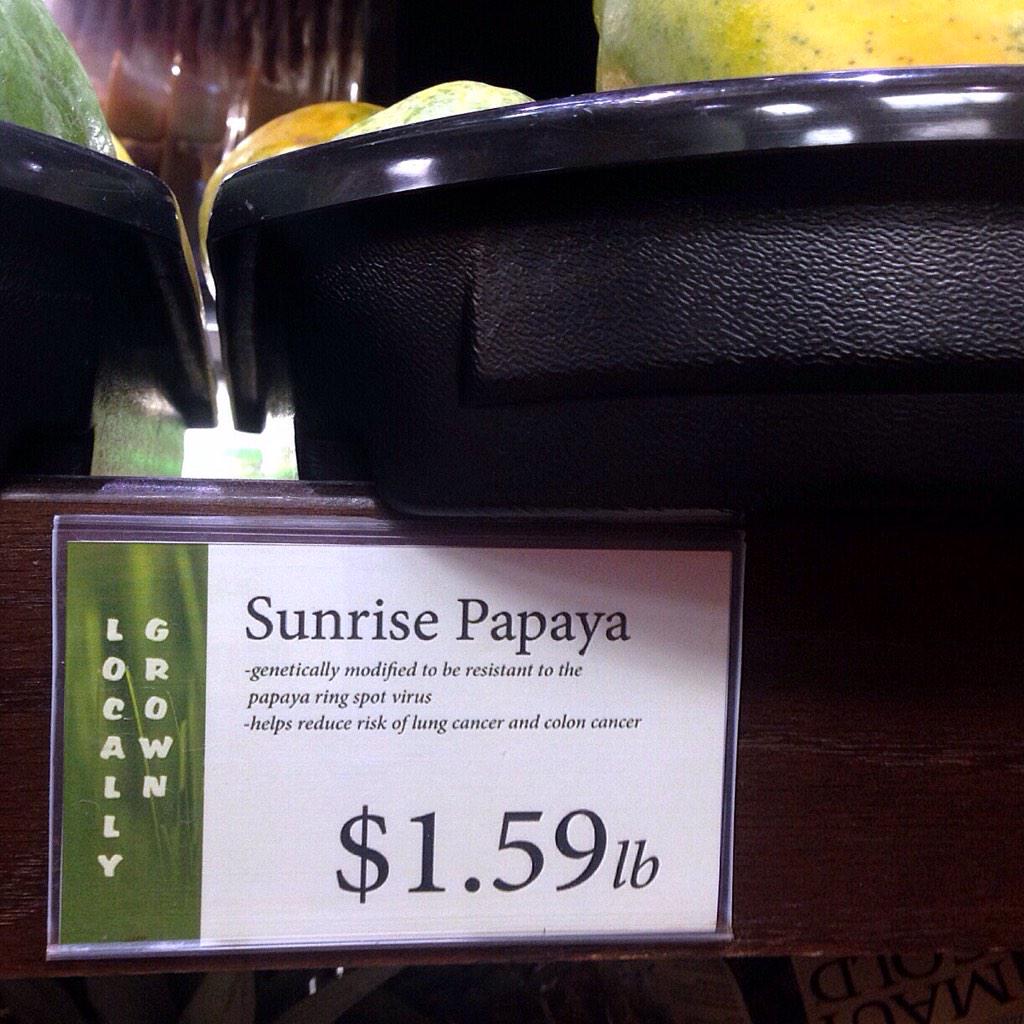
10-12-2014, 08:01 PM
|
#381
|
|
Franchise Player
Join Date: Nov 2006
Location: Salmon with Arms
|

Quote:
Originally Posted by Harry Lime

I've just read the last couple of pages and there seems to be a lot of simplification of the issue leading to in-definitive conclusions. So, time for me to do the same!
Artificial selection maintains desired traits within a species. Cross species breeding is rare, and frequently leads to a dead end as post selection results are often sterile. The process is slow, taking many generations, which by it's nature removes unreliable traits, because the subjects simply do not survive.
Gene modification does not preclude introduction of genes from an alternate species, and post modification breeding or seeding is possible. The process is quick and controlled, and natural elimination of the new traits can be sidestepped through manipulation of the environment.
I might be completely wrong, but my third hand knowledge is clearly at it's peak.
My personal interest in corporations like Monsanto has turned into a hobby. I looked up all of the different ways 'corn' can be listed in an ingredients label, and then I look at all of the items in my grocery basket, and wonder why 'corn' has to be in 90% of them. Corn is in everything.
|
Again though, I don't see where the dangerous difference is. Adding traits that are unreliable leads to the same fate for a manipulated genome as it does a selected one. If you make a less robust species through a lab or by splicing, selection, etc it makes absolutely no difference.
The "natural" order of things is irrelevant to the end result
|

|

|
|
01-19-2015, 12:25 PM
|
#383
|
|
|
http://www.goldenrice.org/
The Dark Side of Anti-GM campaigns. This product could save lives, and eyesight, all over the third world.
http://blogs.scientificamerican.com/...-a-deficiency/
Quote:
|
their study, published in the journal Environment and Development Economics, estimates that the delayed application of Golden Rice in India alone has cost 1,424,000 life years since 2002. That odd sounding metric – not just lives but ‘life years’ – accounts not only for those who died, but also for the blindness and other health disabilities that Vitamin A deficiency causes. The majority of those who went blind or died because they did not have access to Golden Rice were children.
|
Last edited by Knut; 01-19-2015 at 12:28 PM.
|
|
|
|
|
The Following 3 Users Say Thank You to Knut For This Useful Post:
|
|
|
01-19-2015, 06:26 PM
|
#385
|
|
Self-Suspension
|
Quote:
Originally Posted by Street Pharmacist
Again though, I don't see where the dangerous difference is. Adding traits that are unreliable leads to the same fate for a manipulated genome as it does a selected one. If you make a less robust species through a lab or by splicing, selection, etc it makes absolutely no difference.
The "natural" order of things is irrelevant to the end result
|
Gene splicing is no different than artificial selection? I wholeheartedly disagree. What's the danger? You create food that seems harmless and turns out to do genetic damage after prolonged consumption.
The difference is huge especially morally, should humans be recombining DNA the way we see fit as opposed to how nature created it? Humans made it this far without covering the planet in genetically altered organisms. You have to think that at least there's a chance it's dangerous.
Last edited by AcGold; 01-19-2015 at 06:31 PM.
|
|
|
|
|
01-19-2015, 07:20 PM
|
#386
|
|
Basement Chicken Choker
Join Date: Jan 2007
Location: In a land without pants, or war, or want. But mostly we care about the pants.
|
Quote:
Originally Posted by AcGold
The difference is huge especially morally, should humans be recombining DNA the way we see fit as opposed to how nature created it?
|
You might as well decry airplanes because "nature" didn't see fit to evolve humans with wings. Morally, the question should always be "does this technology do more harm than good" and never "it ain't natural!"
__________________
Better educated sadness than oblivious joy.
|
|
|
|
|
The Following 4 Users Say Thank You to jammies For This Useful Post:
|
|
|
01-19-2015, 07:24 PM
|
#387
|
|
Franchise Player
Join Date: Nov 2006
Location: Salmon with Arms
|
Quote:
Originally Posted by AcGold
Gene splicing is no different than artificial selection? I wholeheartedly disagree. What's the danger? You create food that seems harmless and turns out to do genetic damage after prolonged consumption.
The difference is huge especially morally, should humans be recombining DNA the way we see fit as opposed to how nature created it? Humans made it this far without covering the planet in genetically altered organisms. You have to think that at least there's a chance it's dangerous.
|
How does it do "genetic damage"? Natural selection creates organisms that damage ecosystems too.
|
|
|
|
|
01-19-2015, 07:35 PM
|
#389
|
|
Our Jessica Fletcher
|
Quote:
Originally Posted by AcGold
The difference is huge especially morally, should humans be recombining DNA the way we see fit as opposed to how nature created it? Humans made it this far without covering the planet in genetically altered organisms.
|
This kind of thinking is just way to similar to that politician recently regarding global warming...
Inhofe goes well beyond the standard Republican's "I'm not a scientist" line. Inhofe has penned a book in which he calls climate change "The Greatest Hoax." His reason it can't be happening? God is in control. "God's still up there," Inhofe wrote, decrying the "arrogance of people to think that we, human beings, would be able to change what He is doing in the climate... " And he's already taken some of that language into congressional debate.
http://arstechnica.com/science/2015/...is-everywhere/
The world needs to end this backward thinking, and stop fearing science. GMOs benefit this planet and it's population beyond what most could ever comprehend.
|
|
|
|
|
01-19-2015, 07:47 PM
|
#390
|
|
Franchise Player
|
We also need to stop defending things under the infallible umbrella of 'science'. It is akin to your argument about the perfect construct of God's creation.
Any time that there is a question that involves the use of scientific evidence to substantiate, the only people that don't speak in absolutes are the scientists. As our knowledge increases, so does our understanding. In this instance, as in many others, there is someone standing in the way of that free accumulation of knowledge.
Access to information in GMO vs. Global Warming is much like comparing an amoeba to a golden retriever. We can't even get an admission of GM let alone a clear idea of method and content, whereas global warming (climate change being a more accurate term), there has been an effort towards clarity.
|
|
|
|
|
01-19-2015, 07:48 PM
|
#391
|
|
Lifetime Suspension
|
GMOs have the potential for tremendous good and tremendous harm. Which means that the highest levels of transparency and public involvement is needed to make GMOs a good thing.
I don't know why people find it surprising when other people prefer to eat food that's been optimized for digestion by hundreds of millions of years of evolution, over a genetically unique species that has existed for 2 months (or any other lab food for that matter).
|
|
|
|
|
01-19-2015, 09:24 PM
|
#392
|
|
Franchise Player
|
What is the tremendous harm?
__________________

|
|
|
|
|
01-19-2015, 09:25 PM
|
#393
|
|
Powerplay Quarterback
|
Quote:
Originally Posted by Matata
I don't know why people find it surprising when other people prefer to eat food that's been optimized for digestion by hundreds of millions of years of evolution, over a genetically unique species that has existed for 2 months (or any other lab food for that matter).
|
Generally, natural selection does not optimize organisms to be eaten and digested; usually it's the exact opposite. Most of what humans eat have been modified and selected for over the last 10 thousand years.
Last edited by accord1999; 01-19-2015 at 09:30 PM.
|
|
|
|
|
The Following 2 Users Say Thank You to accord1999 For This Useful Post:
|
|
|
01-19-2015, 09:30 PM
|
#394
|
|
Franchise Player
Join Date: Nov 2006
Location: Salmon with Arms
|
Quote:
Originally Posted by Matata
GMOs have the potential for tremendous good and tremendous harm. Which means that the highest levels of transparency and public involvement is needed to make GMOs a good thing.
I don't know why people find it surprising when other people prefer to eat food that's been optimized for digestion by hundreds of millions of years of evolution, over a genetically unique species that has existed for 2 months (or any other lab food for that matter).
|
Nature didn't select cows to taste delicious when charred and sprinkled with salt. That's absurd. No plant is optimized for another's health.
|
|
|
|
|
01-19-2015, 09:41 PM
|
#395
|
|
First Line Centre
Join Date: Apr 2009
Location: Behind Enemy Lines
|
Quote:
Originally Posted by Street Pharmacist
Nature didn't select cows to taste delicious when charred and sprinkled with salt. That's absurd. No plant is optimized for another's health.
|
I disagree. Natural selection drives the propagation of traits that are favorable to survival. Perhaps the traits for survival are secondarily favorable for another's survival? There are a variety of commensal relationships amongst the worlds biome, and even something as simple as the consumption of a fruit or vegetable may cause an animal or plant to consume it and deposit its seed in its feces elsewhere- thus contributing to enhanced fitness. Nature is a funny thing comprised of many weird and odd relationships: I wouldn't be so quick to eliminate concepts in regards to purpose.
|
|
|
|
|
01-19-2015, 11:06 PM
|
#396
|
|
Powerplay Quarterback
Join Date: Jan 2009
Location: Calgary
|
Quote:
Originally Posted by krynski
I disagree. Natural selection drives the propagation of traits that are favorable to survival. Perhaps the traits for survival are secondarily favorable for another's survival? There are a variety of commensal relationships amongst the worlds biome, and even something as simple as the consumption of a fruit or vegetable may cause an animal or plant to consume it and deposit its seed in its feces elsewhere- thus contributing to enhanced fitness. Nature is a funny thing comprised of many weird and odd relationships: I wouldn't be so quick to eliminate concepts in regards to purpose.
|
Like poison? Many plants are poisonous, and most plants are inedible.
|
|
|
|
|
01-19-2015, 11:40 PM
|
#398
|
|
First Line Centre
Join Date: Apr 2009
Location: Behind Enemy Lines
|
Quote:
Originally Posted by Knalus
Like poison? Many plants are poisonous, and most plants are inedible.
|
I don't get what you are getting at. Sure, many plants are poisonous, and sure, most plants don't have a nutritional value for humans. However, even though they don't have a nutritional value for us doesn't mean they are not nutritionally valuable for other organisms. Simple example is how cows can eat grass, and we don't get any nutritional value from grass. In regards to poisons, dark chocolate contains canine poisons, but it is harmless to humans. Different animals/microbes/plants are affected by different chemicals components.
A good example for what I was saying is big fruits. Apricots, cherries, apples, figs, olives, etc. all are large and contains desirable flavors for a lot of animals. These characteristics make the fruit desirable for animals to consume, which ends up spreading seeds to areas that gravity would not be able to deliver the seed.
|
|
|
|
|
01-19-2015, 11:52 PM
|
#399
|
|
Franchise Player
Join Date: Nov 2006
Location: Salmon with Arms
|
Quote:
Originally Posted by krynski
I disagree. Natural selection drives the propagation of traits that are favorable to survival. Perhaps the traits for survival are secondarily favorable for another's survival? There are a variety of commensal relationships amongst the worlds biome, and even something as simple as the consumption of a fruit or vegetable may cause an animal or plant to consume it and deposit its seed in its feces elsewhere- thus contributing to enhanced fitness. Nature is a funny thing comprised of many weird and odd relationships: I wouldn't be so quick to eliminate concepts in regards to purpose.
|
That will work for depositing seeds of the trait has been known about for centuries, maybe. How would natural selection cause a tomato to be healthier when the seeds are irrelevant?
|
|
|
|
|
01-19-2015, 11:55 PM
|
#400
|
|
Franchise Player
Join Date: Nov 2006
Location: Salmon with Arms
|
Quote:
Originally Posted by krynski
I don't get what you are getting at. Sure, many plants are poisonous, and sure, most plants don't have a nutritional value for humans. However, even though they don't have a nutritional value for us doesn't mean they are not nutritionally valuable for other organisms. Simple example is how cows can eat grass, and we don't get any nutritional value from grass. In regards to poisons, dark chocolate contains canine poisons, but it is harmless to humans. Different animals/microbes/plants are affected by different chemicals components.
A good example for what I was saying is big fruits. Apricots, cherries, apples, figs, olives, etc. all are large and contains desirable flavors for a lot of animals. These characteristics make the fruit desirable for animals to consume, which ends up spreading seeds to areas that gravity would not be able to deliver the seed.
|
It would be better for the plant to be delicious. The health effects of those fruit are irrelevant. Do you think cave men cared about their cholesterol levels? The human body evolved to eat many things. The food didn't evolve to fit human diet...
|
|
|
|
|
The Following User Says Thank You to Street Pharmacist For This Useful Post:
|
|
 Posting Rules
|
You may not post new threads
You may not post replies
You may not post attachments
You may not edit your posts
HTML code is Off
|
|
|
All times are GMT -6. The time now is 04:21 AM.
|
|