01-23-2026, 06:44 PM
|
#29021
|
|
First Line Centre
|
Quote:
Originally Posted by troutman

Katy Perry: 'I'm having Justin Trudeau's baby'
|
lol. All those men with all of those bumper stickers must just be so confused right now.
|

|

|
|
01-23-2026, 07:24 PM
|
#29022
|
|
#1 Goaltender
Join Date: Nov 2005
Location: the middle
|

Quote:
Originally Posted by Mr.Coffee
2 things.
One is that I’m not that interested in having a debate about it. I’m really not. Nobody is interested in changing their mind.
|
Why wouldn’t they? This isn’t the fervent left and environmental warriors who see the rise in production as the problem, these would be people who see a significant rise in production and think ‘isn’t that a good thing?’
Quote:
|
Two is that it is not the right framing. As if exporting the most oil ever is the right way to think about it, it isn’t. It doesn’t take into account consideration about a million things and lacks so much context and is so disingenuous it’s kinda tough to even know where to start.
|
The start is easy: ‘heres just one or two of a million reasons why a 50% increase in production isn’t as good as it seems.’
Quote:
|
Yes, everyone in oil and gas are whiny. And all they do is whine and they have no point to their whining and they have nothing to complain about and the country has done an amazing job for the industry to make sure it is all working really smoothly and competitively. Got it. You guys win the debate thing, now let’s continue to watch the Canadian economy slide.
|
‘Hey auto workers, I know you’ve seen production fall by 50% over the past decade, but wait until you hear what the oil and gas industry has been through!’
Canadians are generally in favour of resource development. But they have their own problems so the ‘our growth and unprecedented levels of production isn’t good and we won’t elaborate further and why are you being so unfair to us, do you even care?!’ shtick probably isn't the way to win hearts and minds. Again, these are people generally in favour of oil and gas production, not against it. Why should what appears to be a thriving industry (because what is the measure of an industry if not their production) be more at the front of their mind ahead of other sectors of the economy?
|
|
|
|
|
The Following User Says Thank You to Roughneck For This Useful Post:
|
|
|
01-23-2026, 07:32 PM
|
#29023
|
|
Franchise Player
Join Date: Nov 2008
Location: the dark side of Sesame Street
|
Quote:
Originally Posted by Wolven
lol. All those men with all of those bumper stickers must just be so confused right now.
|
Or jealous.
__________________
"If Javex is your muse…then dive in buddy"
- Surferguy
|
|
|
|
|
01-23-2026, 11:23 PM
|
#29024
|
|
#1 Goaltender
|
Quote:
Originally Posted by Roughneck
Why wouldn’t they? This isn’t the fervent left and environmental warriors who see the rise in production as the problem, these would be people who see a significant rise in production and think ‘isn’t that a good thing?’
|
#-3's response is typically the one that occurs in these types of discussions and what we generally find in this forum. If such people were reasonable in discussing, the question asking to debate it wouldn't be happening as they would get informed themselves. Generally, they are already of a narrative mindset born out of years of deliberate misinformation and biased agendas.
Case exhibit A
Quote:
Originally Posted by #-3
Finally a Trudeau and Notely supporter who appreciated the infrastructure they built.
|
This narrative of course omits that Notley herself called Trudeau completely tone deaf on oil and gas and Alberta issues.
There is far more to the oil industry than just production. Production stayed relatively steady in 2020 even while oil prices were negative yet people at the time weren't gaslighting that oil and gas was doing great. As it happens, you can't just shut off production on a dime, and a shut down could takes months to a year to get back to normal (hence negative prices and the massive fleet of oil tankers sitting around waiting for the world to reopen). This is why despite being at negative, Canada still produced 17.41 millions of cubic meters in May 2020, only 20% lower than the 'all time peak' months of 2024 being vaunted
Heck, the claim that oil has climbed continuously to all time highs is somewhat bogus to begin with, it has stayed relatively flat in recent years fluctuating based on seasonality and isolated incidents (forest fires shutting down production, upgrader maintenance etc).
https://www150.statcan.gc.ca/n1/dail...g-f004-eng.htm
January 2020 21.58
September 2024 21.15
Quote:
Oil sands extraction fell 2.5% year over year to 15.3 million cubic metres in September 2024. The decline was driven by lower production of crude bitumen (-9.5%), while production of synthetic crude rose 11.7% year over year despite some turnaround activities underway at two upgraders.
Conventional oil extraction was up 9.1% to 5.9 million cubic metres in September, offsetting the decline in oil sands extraction. The gain was largely driven by the production of light and medium crude oil in Newfoundland and Labrador, which rose 92.4% year over year because of maintenance, reducing production in September 2023.
|
And notably, one major factor that has changed in 2024 to influence production is the opening of the TMX expansion which has completely opened up asian markets to Canadian oil exports, and giving a huge boost to WCS not requiring such a significant discount anymore with new markets opened. Oil companies are definitely in a better spot with the opening of TMX (hence offering strong validation that pipelines are in fact needed).
https://www.asiapacific.ca/publicati...sia-and-beyond
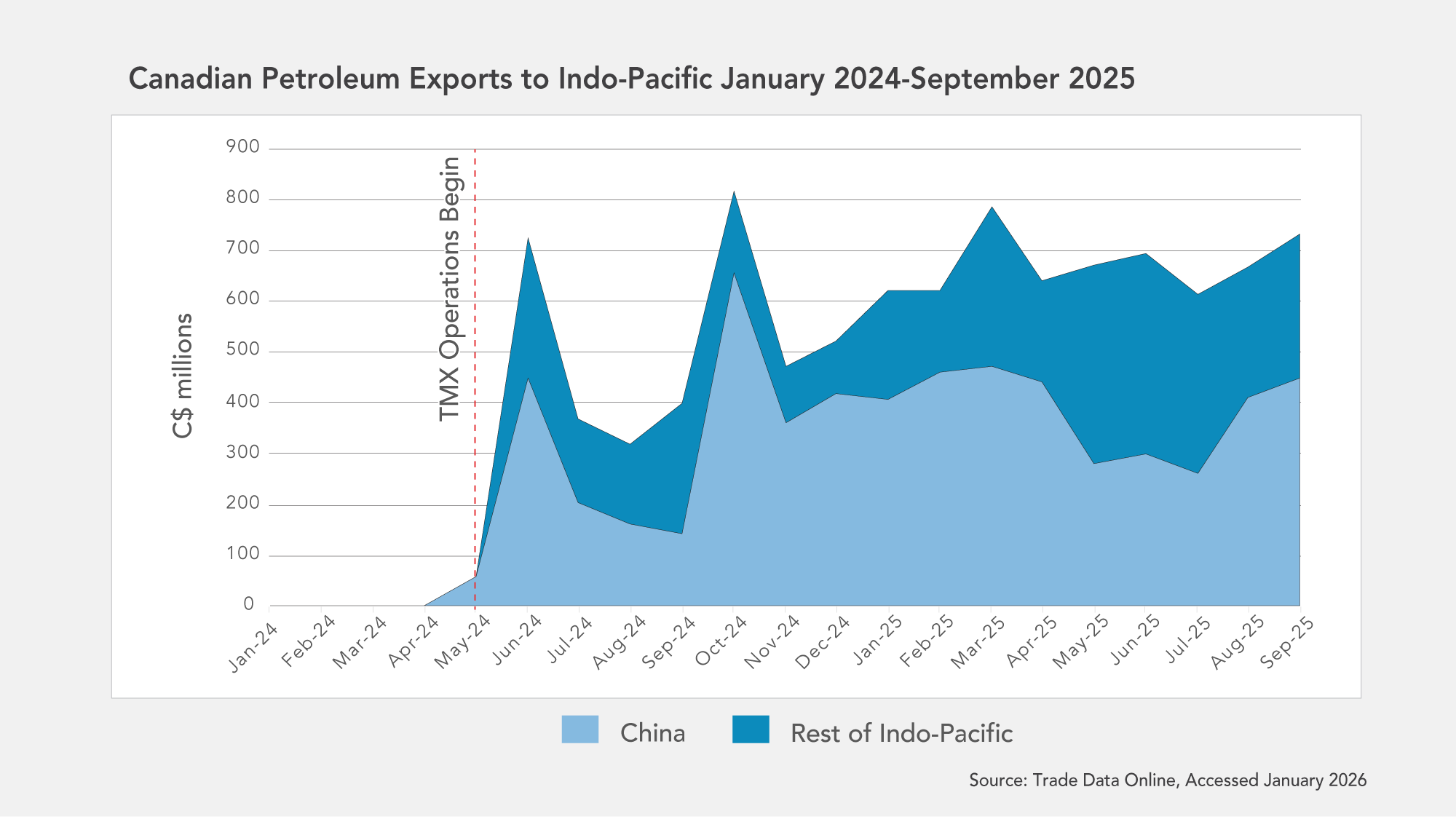
Effectively, if your profit margins drop by over half, and you need to double production to make up the margin loss, are you ahead just because you are producing more? Most reasonable folks would say no. That's where oil prices, WCS discount, carbon taxes all factor in to why oil and gas companies still need to produce, and produce more.
This is why Notley bought rail cars to move product to help oil companies stay solvent in a pricing crisis in 2018 caused by lack of pipeline capacity. Yet 2018 was an all time high in production at the time.
https://www.cbc.ca/news/politics/not...deau-1.4923976
Quote:
Western Canadian Select, which includes product from the oilsands, trades at just $11.56 US — less than a quarter of the $51.49 that West Texas Intermediate (WTI), the U.S. gold standard, fetches on the open market. (These prices were current as of Wednesday.)
"Coca-Cola sells sugar-flavoured water for more. We are essentially giving our oil away for free," Notley said.
|
I could write an essay on it, but I've already done several on different aspects.
If what I provided helped yourself though in understanding why some people are at odds with the production metric, hopefully the effort was worth the time to write and read.
Last edited by Firebot; 01-23-2026 at 11:35 PM.
|
|
|
|
|
The Following 3 Users Say Thank You to Firebot For This Useful Post:
|
|
|
01-23-2026, 11:34 PM
|
#29025
|
|
Franchise Player
|
Quote:
Originally Posted by troutman
Katy Perry: 'I'm having Justin Trudeau's baby'
|
Wouldn't that be a severe geriatric pregnancy?
|
|
|
|
|
01-24-2026, 08:42 AM
|
#29026
|
|
Franchise Player
Join Date: Mar 2015
Location: Pickle Jar Lake
|
Quote:
Originally Posted by Firebot
And notably, one major factor that has changed in 2024 to influence production is the opening of the TMX expansion which has completely opened up asian markets to Canadian oil exports, and giving a huge boost to WCS not requiring such a significant discount anymore with new markets opened. Oil companies are definitely in a better spot with the opening of TMX (hence offering strong validation that pipelines are in fact needed).
|
I was interested in seeing if I could find some crude formula that for every MMBPD of west coast export the differential narrows by so much, so we could see the value of additional pipelines, but alas, that would be too simple.
TMX hasn't been operating long enough or through enough types of market conditions that you can find a pattern to extract. The differential has declined, but not enough data to figure out the amount caused by TMX. What I did find was commentary saying it's provided more stability in the differential, which is a good thing for predictability. And that is something you can see in the chart.
 https://www.aer.ca/data-and-performa...anadian-select
Quote:
|
Effectively, if your profit margins drop by over half, and you need to double production to make up the margin loss, are you ahead just because you are producing more? Most reasonable folks would say no. That's where oil prices, WCS discount, carbon taxes all factor in to why oil and gas companies still need to produce, and produce more.
|
The alternative is just less profit, otherwise you could argue when times are good they could double production and double profit, right? They don't HAVE to do anything other than rake in less money. At $2 billion a quarter(Suncor), there is room for that(and one of my primary arguments we don't get enough income from the industry given the costs they are downloading on taxpayers). But my point is your argument is they must do these things to survive the tyranny of regulations and competing interests restricting their production, but they don't. They won't die. They choose to produce more to make more profit and when export capacity exists, not only because they must for survival.
|

|
|
|
The Following User Says Thank You to Fuzz For This Useful Post:
|
|
|
01-24-2026, 09:32 AM
|
#29027
|
|
Loves Teh Chat!
|
Quote:
Originally Posted by chemgear
Wouldn't that be a severe geriatric pregnancy?
|
She's 41. Technically it is a geriatric pregnancy but its not THAT old.
|
|
|
|
|
01-24-2026, 09:35 AM
|
#29028
|
|
Franchise Player
|
Quote:
Originally Posted by Firebot
#-3's response is typically the one that occurs in these types of discussions and what we generally find in this forum. If such people were reasonable in discussing, the question asking to debate it wouldn't be happening as they would get informed themselves. Generally, they are already of a narrative mindset born out of years of deliberate misinformation and biased agendas.
|
I genuinely appreciate the response, I do think there is an overly leftward lean on this board in general, I would argue the main reason for this if when a right leaning person makes a claim on this board people begin to refute the claim, then the right leaning claimant tucks tail and run because they are unwilling to defend their claim against an argument made in good faith. While generally I have seen many people on this board who have become more and more left over time as the right wing has detached itself more and more from good discourse, that will defend their point or revise their point when faced with new information.
I will admit in this case my argument was made in bad faith, because yes I was making fun of the fact that when certain political parties do not provide the level of corporate charity you (and sorry I do not mean to include/exclude you directly, I mean the general vibe from the right wing political movement) expect you will spend generations pissing and moaning about it, while giving the other side of the isle a free pass on things that are far more egregious in every measurable way fiscal/social/moral.... The fact is was Trudeau openly friendly to the O&G industry, no. Did he single handily decimate the industry? No. It is an industry that grew not only in scale but market share under Trudeau, large because of Trudeau policy which was the expansion of TMX.
Quote:
Originally Posted by Firebot
Effectively, if your profit margins drop by over half, and you need to double production to make up the margin loss, are you ahead just because you are producing more? Most reasonable folks would say no. That's where oil prices, WCS discount, carbon taxes all factor in to why oil and gas companies still need to produce, and produce more.
|
I'd like to tackle this claim directly, it is the reason I specifically cited global market share in my argument. This is especially relevant in a commodities market. As you know because you are seemingly in the industry, when profit margins falling one of the things you can do to further erode margins is produce, because commodities have this habit of following simple supply and demand curves. I don't work in O&G, but I can tell you when customers start buying less we do one of 2 things, we look to offer new services or we take less work on usually at lower prices and see out profits drop, rarely especially during down turn would be expect to just push more product out on to the market and hope it makes things better.
I'll also state that I am not reciting mis-information that is received from outside. I have spent the bulk of my career buying/selling non-O&G commodities, and my opinions are my own and fully formed in comparison to other industries, going directly to sources like statscan to understand how prices and volumes are changing over time.
I do understand the expectations of the O&G industry in Alberta which is unregulated development, and government charity on site reclamation. I believe I heard and I wont say at this time to what extent it is true but the uninsured clean up liability of O&G production in Alberta might be as high as 50% of every dollar every received from royalties, and this is claim I may be able to provide sourcing for tonight, I think but I am not sure it came from a UofC researcher David Keith, but I could be remembering wrong. Hundreds of billions of dollar, so like any other industry, it is incumbent on the government to mitigate that risk. And I think likewise, it should be incumbent on businesses within that industry to learn to work within a market that is mitigating those risks, instead of whining that big bad Trudeau was mean to you. Trust me, my industry is facing ever increasing government regulation too, an we meet it with innovation and higher standers, not an organized disinformation campaign that blames everyone else for all of our problems.
Last edited by #-3; 01-24-2026 at 09:39 AM.
|
|
|
|
|
The Following 5 Users Say Thank You to #-3 For This Useful Post:
|
|
|
01-25-2026, 12:33 PM
|
#29029
|
|
#1 Goaltender
|
Quote:
Originally Posted by Torture
She's 41. Technically it is a geriatric pregnancy but its not THAT old.
|
Chemgear thinks any woman over 23 having a kid is geriatric
|
|
|
|
|
01-27-2026, 06:53 AM
|
#29030
|
|
Franchise Player
Join Date: Mar 2015
Location: Pickle Jar Lake
|
Great example here of how Pierre is only interested in preformative clap-trap, when he could be making moves to pressure Carney.
Quote:
As promised by Conservative Leader Pierre Poilievre in his open letter to the prime minister last week, his party is poised to launch a day-long debate — and, ultimately, a vote — on their call for the government to “immediately introduce a Canada Sovereignty Act that re-establishes Canada as a competitive resource-producing nation by repealing federal measures that block or penalize development,” including the Impact Assessment Act and the Oil Tanker Moratorium Act, along with the federal industrial carbon tax, oil and gas emissions cap, e-vehicle sales mandate and “plastics manufacturing prohibitions.”
The proposed legislation — an earlier version of which was initially unveiled by Poilievre last summer, accompanied by a pledge to bring forward a motion to adopt it “at the earliest opportunity,” but failed to make it onto the floor of the House of Commons — would also include measures that “reward provinces, businesses, and workers who build and invest in Canada,” including the Canada First Reinvestment Tax Cut, as well as other measures lifted directly from the Conservative campaign platform.
The non-binding motion, which stands in the name of veteran Conservative MP Shannon Stubbs, seems unlikely to pass without the backing of the government, as it includes measures that neither the Bloc Québécois nor the New Democrats would be prepared to support.
|
https://www.ipolitics.ca/2026/01/27/...-debate-today/
Maybe try proposing some legislation you can wrangle support for? Naw, just keep being Pierre.
|
|
|
|
|
01-27-2026, 07:10 AM
|
#29031
|
|
Franchise Player
|
Meanwhile, on the first day of the new session the Conservatives have shown that they will support the proposed GST rebate introduced by the Liberal government. The Conservatives are going into this session having indicated that cooperation is a priority at this point.
|
|
|
|
|
01-27-2026, 08:52 AM
|
#29032
|
|
Franchise Player
Join Date: Dec 2006
Location: Calgary, Alberta
|
Quote:
Originally Posted by Fuzz
Great example here of how Pierre is only interested in preformative clap-trap, when he could be making moves to pressure Carney.
https://www.ipolitics.ca/2026/01/27/...-debate-today/
Maybe try proposing some legislation you can wrangle support for? Naw, just keep being Pierre. |
And really, I understand that we should build and encourage these projects, but the CPC doesn't want any assessments? They don't think that the government ought to take a look at the environmental ramifications (among other things), and determine if the project is positive/negative in that light?
This is a great example of how out of step they are with basically everyone else in the country.
|
|
|
|
|
The Following 5 Users Say Thank You to Slava For This Useful Post:
|
|
|
01-27-2026, 09:10 AM
|
#29033
|
|
Franchise Player
|
Quote:
Originally Posted by Slava
And really, I understand that we should build and encourage these projects, but the CPC doesn't want any assessments? They don't think that the government ought to take a look at the environmental ramifications (among other things), and determine if the project is positive/negative in that light?
This is a great example of how out of step they are with basically everyone else in the country.
|
A large part of the Impact Assessment Act is unconstitutional.
|
|
|
|
|
01-27-2026, 09:48 AM
|
#29034
|
|
#1 Goaltender
Join Date: Nov 2005
Location: the middle
|
Quote:
Originally Posted by calgarygeologist
A large part of the Impact Assessment Act is unconstitutional.
|
The 'federal overreach into provincial jurisdiction' part. It's not like assessments are unconstitutional. If BC demands them, should the federal government overreach into provincial jurisdiction to prevent them?
|
|
|
|
|
01-27-2026, 10:29 AM
|
#29035
|
|
#1 Goaltender
|
Quote:
Originally Posted by Slava
And really, I understand that we should build and encourage these projects, but the CPC doesn't want any assessments? They don't think that the government ought to take a look at the environmental ramifications (among other things), and determine if the project is positive/negative in that light?
This is a great example of how out of step they are with basically everyone else in the country.
|
Nowhere did I read that the CPC doesn't want any assessments. Did assessments only started existing in 2019? The Canadian Environmental Assessment Act was implemented in 2012 under the CPC prior to being repealed, and it's previous version in 1992 under the PC government.
That's a clear strawman if I've ever seen one.
Carney so far has been very pragmatic, and I expect there is going to be an amendment or compromise versus outright repealing (which won't happen without something replacing it). A stark difference from his predecessor who lived for ideological conflict and division. But this motion will never pass as is.
In the end, Poilievre's tactic is meant as a cheap political ah-ha where he can go back and say "see I tried but Carney wants to keep Trudeau era policies". There's obviously a better way to approach this if he genuinely wants to cooperate, but this is Poilievre we are talking about.
|
|
|
|
|
01-27-2026, 10:32 AM
|
#29036
|
|
Franchise Player
Join Date: Sep 2009
Location: Calgary
|
His political stunts are just going to end up resulting in more CPC MPs crossing the floor and handing Carney a majority.
__________________
Pylon on the Edmonton Oilers:
"I am actually more excited for the Oilers game tomorrow than the Flames game. I am praying for multiple jersey tosses. The Oilers are my new favourite team for all the wrong reasons. I hate them so much I love them."
|
|
|
|
|
01-27-2026, 10:42 AM
|
#29037
|
|
Franchise Player
Join Date: Dec 2006
Location: Calgary, Alberta
|
Quote:
Originally Posted by Firebot
Nowhere did I read that the CPC doesn't want any assessments. Did assessments only started existing in 2019? The Canadian Environmental Assessment Act was implemented in 2012 under the CPC prior to being repealed, and it's previous version in 1992 under the PC government.
That's a clear strawman if I've ever seen one.
Carney so far has been very pragmatic, and I expect there is going to be an amendment or compromise versus outright repealing (which won't happen without something replacing it). A stark difference from his predecessor who lived for ideological conflict and division. But this motion will never pass as is.
In the end, Poilievre's tactic is meant as a cheap political ah-ha where he can go back and say "see I tried but Carney wants to keep Trudeau era policies". There's obviously a better way to approach this if he genuinely wants to cooperate, but this is Poilievre we are talking about.
|
Ok, so if that one gets repealed now, what are we left with?
|
|
|
|
|
01-27-2026, 10:43 AM
|
#29038
|
|
Franchise Player
|
So the conservatives spent the entire morning posting a clip from Hannity where Bessent says that Carney walked back his Davos comments in a convo with Trump. Carney confirms that he did not say anything like that. Awkward place for the Cons as they need Trump to validate their statements and nobody believes anything Trump says and nothing Carney has done indicates that Trump and his minions could be remotely correct.
|
|
|
|
|
The Following 3 Users Say Thank You to Aarongavey For This Useful Post:
|
|
|
01-27-2026, 10:47 AM
|
#29039
|
|
Franchise Player
Join Date: Aug 2009
Location: wearing raccoons for boots
|
I am shocked to hear someone in the trump admin may have lied...
|
|
|
|
|
01-27-2026, 10:49 AM
|
#29040
|
|
#1 Goaltender
|
But I thought the CPC was coming from a place of co-operation?
You mean to tell me they're still playing gotcha political games? Quelle suprise.
|
|
|
|
 Posting Rules
|
You may not post new threads
You may not post replies
You may not post attachments
You may not edit your posts
HTML code is Off
|
|
|
All times are GMT -6. The time now is 01:42 PM.
|
|