02-25-2011, 09:25 AM
|
#2
|
|
Franchise Player
Join Date: Oct 2001
Location: Behind Nikkor Glass
|
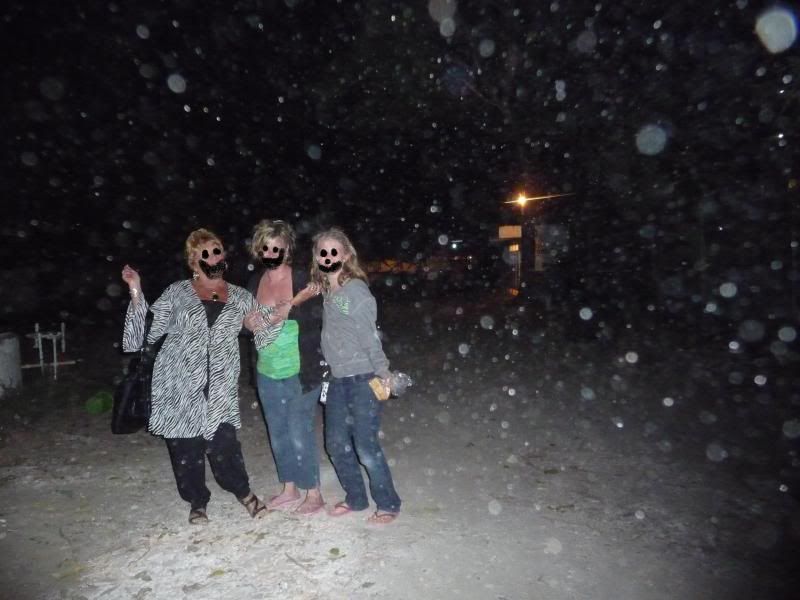
Your wife is partially right. They are optic orbs, not the paranormal kind.
http://en.wikipedia.org/wiki/Orb_(optics)
Quote:
|
Orb artifacts are captured during low-light instances where the camera's flash is used, such as at night or underwater. The artifacts are especially common with compact or ultra-compact cameras, where the short distance between the lens and the built-in flash decreases the angle of light reflection to the lens, directly illuminating the aspect of the particles facing the lens and increasing the camera's ability to capture the light reflected off normally sub-visible particles.
|
|

|

|
|
The Following 2 Users Say Thank You to Regulator75 For This Useful Post:
|
|
|
02-25-2011, 09:28 AM
|
#3
|
|
First Line Centre
|
Thanks Regulator.
Can anything be done about it....short of buying a better camera?
|
|
|
|
|
02-25-2011, 09:33 AM
|
#4
|
|
Franchise Player
Join Date: Oct 2001
Location: Behind Nikkor Glass
|
Most compact cameras are prone to this. It doesn't happen every time, so try taking a couple shots instead of just one.
|
|
|
|
|
The Following User Says Thank You to Regulator75 For This Useful Post:
|
|
|
02-25-2011, 01:18 PM
|
#5
|
|
I'll get you next time Gadget!
|
Hmm, I was just going to tell you it was snowing.
Learn something new every day.
|
|
|
|
|
02-25-2011, 01:42 PM
|
#6
|
|
Powerplay Quarterback
Join Date: Aug 2002
Location: Mayor of McKenzie Towne
|
Quote:
Originally Posted by Buzzard

Thanks Regulator.
Can anything be done about it....short of buying a better camera?
|
Caused by a wide open lens (aperture) and a flash that is located close to the center of the lens.
In a compact camera not much you can do other than avoid these types of low-light situations.
Moving to an off-camera flash or using a tripod and a resulting longer shutter speed (smaller aperture) would also reduce this.
__________________
"Teach a man to reason, and he'll think for a lifetime"
~P^2
|
|
|
|
|
The Following User Says Thank You to firebug For This Useful Post:
|
|
|
02-25-2011, 01:43 PM
|
#7
|
|
Franchise Player
Join Date: Sep 2008
Location: Calgary
|
Quote:
Originally Posted by Buzzard
Can anything be done about it....short of buying a better camera?
|
Not much, unfortunately. Getting the lens farther from the flash is the key, and when you've got a fixed lens and a fixed flash, it obviously isn't going to happen. Keep in mind that even the best point and shoot cameras will be prone to this, so don't lose any sleep over it.
|
|
|
|
|
The Following User Says Thank You to Jimmy Stang For This Useful Post:
|
|
|
02-25-2011, 01:44 PM
|
#8
|
|
Franchise Player
Join Date: Sep 2008
Location: Calgary
|
And what's with the flip-flops? 
|
|
|
|
|
02-25-2011, 09:03 PM
|
#9
|
|
First Line Centre
|
Thanks for help guys.
Yeah, ya know, it's not an expensive camera by any means, but its only a couple years old, and was kind of pickin' me that this was happening. Now that i know its a common thing I don't feel too bad.
I was just dusting it off today for a vacation starting tomorrow. Land of flip flops and optical orbs....here we come! 
|
|
|
|
|
12-09-2025, 10:35 PM
|
#10
|
|
First Line Centre
Join Date: Sep 2004
Location: Vernon, BC
|
Major bump!
I've taken to photography lately, not as a career, just as an artful expression. I'm interested in being "honest" in it, and using mainly the exposure and lense to compose the photo. I didn't really fully understand until recently however, how much digital cameras may enhance photos themselves without any other input, through colour profiles etc, but then I figure films do that too, Kodachrome, Fujifilm, etc each has their own subtleties. I could just choose a flat or neutral profile, but that often makes the picture less than what you saw. Then I learned it's pretty common to shoot flat or neutral raw files and tweak then to how you see fit, which I'm not against, but at some point it becomes an unbelievable image.
I realize it's a matter of opinion, and there's no right or wrong answer. Just wondering what different people think.
|
|
|
|
|
12-09-2025, 11:21 PM
|
#11
|
|
Franchise Player
Join Date: Mar 2015
Location: Pickle Jar Lake
|
Film photography involved choices like film down to brand and type, B&W, slide...and that's without involving using a dark room where you have all the choices incorporated into digital dark rooms(and a lot more). Ultimately photography is an art and you make the choices as an artist. If you choose to overdo the sliders, that's your choice. I usually try to recreate what I see, which is never what the camera sees. But sometimes it's fun to take a photo from real to surreal. It's all fine. It's not like you'll end up making dubstep or something.
|
|
|
|
|
The Following User Says Thank You to Fuzz For This Useful Post:
|
|
|
12-09-2025, 11:30 PM
|
#12
|
|
Craig McTavish' Merkin
|

Quote:
Originally Posted by Delthefunky
Major bump!
I've taken to photography lately, not as a career, just as an artful expression. I'm interested in being "honest" in it, and using mainly the exposure and lense to compose the photo. I didn't really fully understand until recently however, how much digital cameras may enhance photos themselves without any other input, through colour profiles etc, but then I figure films do that too, Kodachrome, Fujifilm, etc each has their own subtleties. I could just choose a flat or neutral profile, but that often makes the picture less than what you saw. Then I learned it's pretty common to shoot flat or neutral raw files and tweak then to how you see fit, which I'm not against, but at some point it becomes an unbelievable image.
I realize it's a matter of opinion, and there's no right or wrong answer. Just wondering what different people think.
|
Ever seen an Ansel Adams photo? Those scenes definitely didn't look like that in real life.
Unless you're shooting for a news publication reality doesn't really matter. It's your art so shoot however you want.
|
|
|
|
|
12-10-2025, 12:12 AM
|
#13
|
|
Franchise Player
Join Date: Oct 2021
Location: Richmond upon Thames, London
|
nm
Last edited by TrentCrimmIndependent; 12-10-2025 at 12:42 AM.
|
|
|
|
|
12-10-2025, 09:52 AM
|
#14
|
|
#1 Goaltender
|
Quote:
Originally Posted by Delthefunky
I realize it's a matter of opinion, and there's no right or wrong answer. Just wondering what different people think.
|
Photography is an art form. If your goal is to recreate the images as close to reality as possible, that is your prerogative. If you want to express your vision you can as well.
In the end you are using an imperfect tool to mimic what the eye sees and will subtly differ from what you see (whether film or digital) and you are doing an artist's interpretation to get as close to 'natural' as you want. Lens focal length, depth of field, colour saturation, ISO (light sensitivity) photo film and turning into what your eyes may see are all interpretations.
For instance a camera is much more receptive to northern lights than you can see with your eyes. To get it 'right' you would need to heavily desaturate the photos which is photo manipulation.
https://ewenbell.com/blog/Why_Aurora..._on_The_Camera
You may find as you develop your love for photography that you get bored of everything looking the same and delve into HDR hell. Just shoot however you want.
|
|
|
|
| Thread Tools |
Search this Thread |
|
|
|
 Posting Rules
|
You may not post new threads
You may not post replies
You may not post attachments
You may not edit your posts
HTML code is Off
|
|
|
All times are GMT -6. The time now is 03:40 AM.
|
|