Quote:
Originally Posted by CliffFletcher

Maybe I didn't explain the flip well.
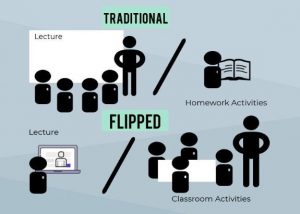
Our current system is people go to lectures on campus to have a prof broadcast content to them, then go off on their own to do the actual course work or collaborative work. The flip proposes the opposite - lectures are accessed independently and on your own time. You still go on campus and still work with others, but in coursework and small learning groups, not lectures.
https://facultyinnovate.utexas.edu/s...ble-120516.pdf
There is no interaction in classes of 200 or 400 students. Or even 60. None. It's an entirely passive one-way process, and it's the foundation of undergraduate education. And the generation that first experienced that mass-consumer model of education, the ones who went to university in the 80s and 90s, know what the score is. They know it's a joke. And now they're ponying up for their kids to go through the same charade.
The reason sitting your ass in lectures for 4 hours a day is still the done thing is because the degrees from traditional institutions are still the only ones that are considered legitimate. It has nothing to do with the experience itself.
As I said, if you invented post-secondary education today, with today's tools, it would look nothing like the 19th century model we cling to. I think anyone who has graduated from a college or university in the last 20 or 30 years will applaud when the system is radically transformed by innovation. |
Your image shows why universities are resistant. See how many students there are per professor in the left, vs. the right? It's not accurate. The left should have 200 students, and the right should have 20. The amount of manpower that would be needed to accommodate the "flip" is beyond most universities abilities. Heck, they seem to have trouble maintaining the staff they have - at the bigger universities, that is.