 06-16-2013, 01:32 AM
|
#196
|
|
Franchise Player
Join Date: Jun 2008
Location: Spartanville
|

Quote:
Originally Posted by The Fonz

#1 Weeds becoming tolerant to glyphosate is not a result of GMO crops, its a result of glyphosate being sprayed on weeds for nearly half a century. Resistance happens when you continually do it, and it was happening before the introduction of RoundupReady crops.
|
Quote:
Here, Nature takes a look at three pressing questions: are GM crops fuelling the rise of herbicide-resistant ‘superweeds’? Are they driving farmers in India to suicide? And are the foreign transgenes in GM crops spreading into other plants? These controversial case studies show how blame shifts, myths are spread and cultural insensitivities can inflame debate.
GM crops have bred superweeds: True
Jay Holder, a farming consultant in Ashburn, Georgia, first noticed Palmer amaranth (Amaranthus palmeri) in a client’s transgenic cotton fields about five years ago. Palmer amaranth is a particular pain for farmers in the southeastern United States, where it outcompetes cotton for moisture, light and soil nutrients and can quickly take over fields.
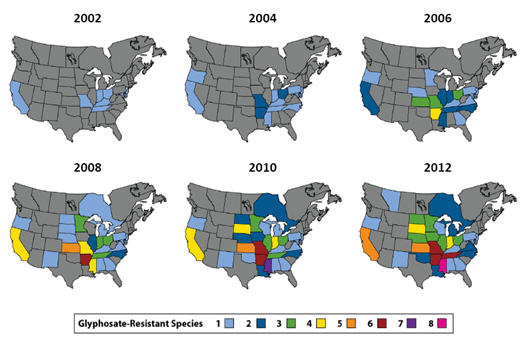
Since the late 1990s, US farmers had widely adopted GM cotton engineered to tolerate the herbicide glyphosate, which is marketed as Roundup by Monsanto in St Louis, Missouri. The herbicide–crop combination worked spectacularly well — until it didn’t. In 2004, herbicide-resistant amaranth was found in one county in Georgia; by 2011, it had spread to 76. “It got to the point where some farmers were losing half their cotton fields to the weed,” says Holder.
Some scientists and anti-GM groups warned that GM crops, by encouraging liberal use of glyphosate, were spurring the evolution of herbicide resistance in many weeds. Twenty-four glyphosate-resistant weed species have been identified since Roundup-tolerant crops were introduced in 1996. But herbicide resistance is a problem for farmers regardless of whether they plant GM crops. Some 64 weed species are resistant to the herbicide atrazine, for example, and no crops have been genetically modified to withstand it.
Still, glyphosate-tolerant plants could be considered victims of their own success. Farmers had historically used multiple herbicides, which slowed the development of resistance. They also controlled weeds through ploughing and tilling — practices that deplete topsoil and release carbon dioxide, but do not encourage resistance. The GM crops allowed growers to rely almost entirely on glyphosate, which is less toxic than many other chemicals and kills a broad range of weeds without ploughing. Farmers planted them year after year without rotating crop types or varying chemicals to deter resistance.
This strategy was supported by claims from Monsanto that glyphosate resistance was unlikely to develop naturally in weeds when the herbicide was used properly. As late as 2004, the company was publicizing a multi-year study suggesting that rotating crops and chemicals does not help to avert resistance. When applied at Monsanto’s recommended doses, glyphosate killed weeds effectively, and “we know that dead weeds will not become resistant”, said Rick Cole, now Monsanto’s technical lead of weed management, in a trade-journal advertisement at the time. The study, published in 2007, was criticized by scientists for using plots so small that the chances of resistance developing were very low, no matter what the practice.
Glyphosate-resistant weeds have now been found in 18 countries worldwide, with significant impacts in Brazil, Australia, Argentina and Paraguay,
|
http://www.nature.com/news/case-stud...-crops-1.12907
 https://www.pioneer.com/home/site/us...phosate-resis/
|

|

|